Workspace Health Score
Workspace Health Score measures the overall effectiveness and vitality of your digital workspace through key performance indicators like user engagement, collaboration frequency, and resource utilization. If you're struggling with declining workspace health scores, wondering why yours is low, or need proven strategies to improve performance, this comprehensive guide provides the frameworks and actionable insights to diagnose issues and optimize your workspace for maximum productivity.
What is Workspace Health Score?
A Workspace Health Score is a composite metric that measures the overall effectiveness and vitality of a digital workspace environment, typically ranging from 0-100. This score evaluates key factors such as user engagement levels, collaboration frequency, content creation rates, and system utilization patterns to provide a comprehensive view of how well teams are leveraging their shared digital tools and resources.
Understanding your workspace health score is crucial for making informed decisions about team productivity, resource allocation, and technology investments. A high workspace health score (typically 80+) indicates strong user adoption, active collaboration, and efficient workflows, suggesting that teams are maximizing their digital workspace potential. Conversely, a low score may signal underutilization, poor user experience, or workflow bottlenecks that require immediate attention.
The workspace health score formula incorporates multiple data points including daily active users, content sharing frequency, response times, and feature adoption rates. This metric is closely related to other productivity indicators such as User Engagement Score, Team Productivity Trends, and Project Health Score. Organizations often analyze workspace health alongside Workspace Utilization Analysis to gain deeper insights into their digital workplace effectiveness and identify opportunities for optimization.
How to calculate Workspace Health Score?
A Workspace Health Score combines multiple performance indicators into a single metric that reflects your workspace's overall effectiveness. The calculation typically uses a weighted average approach to balance different aspects of workspace performance.
Formula: Workspace Health Score = (Σ(Metric Score × Weight)) / Total Weight × 100
The numerator represents the sum of each individual metric score multiplied by its assigned weight. Common metrics include user activity rates, collaboration frequency, tool adoption, response times, and project completion rates. The denominator is the total weight assigned across all metrics, ensuring the final score remains on a 0-100 scale.
You'll typically source these numbers from various workplace tools: user engagement data from collaboration platforms, project completion rates from task management systems, and response times from communication tools. Each metric is first normalized to a 0-100 scale before applying weights.
Worked Example
Consider a workspace tracking four key metrics:
- User Activity Rate: 85% (Weight: 30%)
- Project Completion Rate: 78% (Weight: 25%)
- Collaboration Index: 92% (Weight: 25%)
- Tool Adoption Rate: 70% (Weight: 20%)
Calculation:
- (85 × 0.30) + (78 × 0.25) + (92 × 0.25) + (70 × 0.20)
- = 25.5 + 19.5 + 23 + 14
- = 82
Workspace Health Score = 82
Variants
Time-based variants include daily snapshots for operational monitoring versus monthly averages for strategic planning. Departmental scoring weights metrics differently based on team functions—sales teams might emphasize collaboration metrics while development teams focus on project completion rates.
Complexity variants range from simple averages of 3-4 core metrics to sophisticated models incorporating 10+ indicators with dynamic weighting based on business priorities or seasonal factors.
Common Mistakes
Inconsistent time periods occur when mixing real-time metrics with historical averages, creating misleading scores. Always align measurement periods across all components.
Poor weight distribution happens when assigning equal weights to all metrics regardless of business impact. A 10% improvement in project completion typically matters more than 10% better tool adoption rates.
Ignoring baseline variations means not accounting for natural fluctuations in workspace activity—vacation periods, project cycles, or seasonal business patterns can skew scores without representing actual health changes.
Stop Guessing About Your Workspace Health
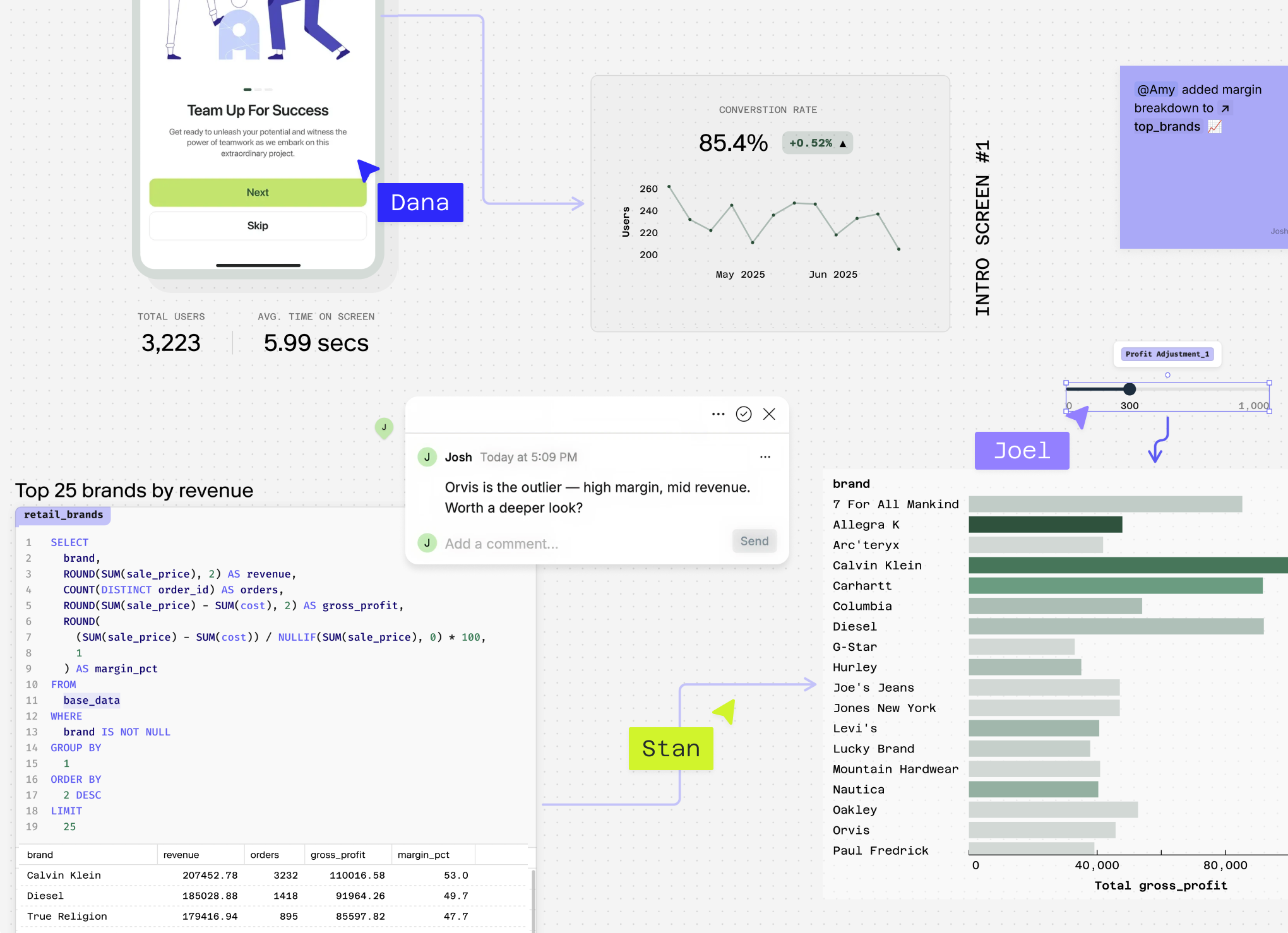
Reading frameworks won't fix your scores. Connect your workspace data to Count's AI analyst and actually measure what's broken—then collaborate with your team to fix it.
What's a good Workspace Health Score?
While it's natural to want benchmarks for your Workspace Health Score, remember that context matters more than absolute numbers. Use these benchmarks as a guide to inform your thinking, not as strict rules that determine success or failure.
Workspace Health Score Benchmarks
| Segment | Excellent (90-100) | Good (70-89) | Fair (50-69) | Poor (<50) |
|---|---|---|---|---|
| SaaS B2B | 85-95 | 70-84 | 55-69 | <55 |
| SaaS B2C | 80-90 | 65-79 | 50-64 | <50 |
| E-commerce | 75-85 | 60-74 | 45-59 | <45 |
| Fintech | 85-95 | 70-84 | 55-69 | <55 |
| Media/Content | 70-80 | 55-69 | 40-54 | <40 |
| Early-stage (<50 employees) | 70-80 | 55-69 | 40-54 | <40 |
| Growth-stage (50-500 employees) | 80-90 | 65-79 | 50-64 | <50 |
| Enterprise (500+ employees) | 85-95 | 70-84 | 55-69 | <55 |
| Self-serve/PLG | 75-85 | 60-74 | 45-59 | <45 |
| Enterprise sales | 85-95 | 70-84 | 55-69 | <55 |
Source: Industry estimates based on workspace productivity studies
Understanding Benchmark Context
These benchmarks help inform your general sense of performance—you'll know when something feels off. However, many metrics exist in tension with each other: as one improves, another may decline. You need to consider related metrics holistically, not optimize any single metric in isolation.
Your average workspace health score should align with your business model and growth stage. Early-stage companies often show lower scores due to rapid changes and evolving processes, while mature organizations typically maintain higher, more stable scores through established workflows and systems.
How Related Metrics Interact
Consider how workspace health connects to broader business metrics. If you're implementing new collaboration tools to boost productivity, you might initially see workspace health scores dip as teams adapt to new workflows. Similarly, rapid hiring phases often temporarily reduce workspace health scores as new team members learn systems and processes, even though headcount growth signals positive business momentum.
The key is tracking workspace health score alongside metrics like employee satisfaction, project completion rates, and communication effectiveness to understand the full picture of your workspace performance.
Why is my Workspace Health Score declining?
When your workspace health score is declining, it signals underlying issues affecting team productivity and collaboration. Here's how to diagnose the root causes:
Low User Engagement Look for decreasing login frequencies, reduced file sharing, and minimal collaboration activity. Users might be avoiding the workspace due to poor performance or lack of relevant content. This directly impacts your User Engagement Score and creates a downward spiral where fewer active users make the workspace less valuable for everyone.
Poor Content Organization Check for cluttered folder structures, duplicate files, and outdated information dominating search results. When users can't find what they need quickly, they disengage from the platform. This organizational decay often correlates with declining Team Productivity Trends as teams waste time searching instead of working.
Technical Performance Issues Monitor for slow loading times, frequent downtime, or sync failures across devices. Performance problems frustrate users and reduce adoption rates. These technical barriers often manifest in your Workspace Utilization Analysis as lower usage patterns and abandoned sessions.
Inadequate Governance and Permissions Review access controls and content approval processes. Over-restrictive permissions limit collaboration, while too-loose controls create security concerns and content chaos. Both scenarios hurt user confidence and engagement.
Lack of Integration with Daily Workflows Examine whether your workspace connects seamlessly with tools your team uses daily. Isolated systems force context-switching that reduces efficiency. This disconnect often shows up in Project Health Score metrics as teams struggle to maintain momentum across fragmented tools.
Understanding why your workspace health score is low requires examining these interconnected factors systematically to identify which improvements will have the greatest impact.
How to improve Workspace Health Score
Boost User Engagement Through Targeted Interventions When workspace health score declining patterns show low engagement, segment users by activity levels using cohort analysis. Identify which teams or individuals show the steepest drops, then implement targeted re-engagement campaigns. Create personalized onboarding refreshers for inactive users and establish regular check-ins with team leads. Validate impact by tracking weekly active users and session duration improvements over 4-6 weeks.
Optimize Tool Integration and Reduce Friction Address why workspace health score is low by analyzing workflow bottlenecks in your existing data. Map user journeys to identify where people drop off or switch between too many tools. Streamline integrations, eliminate redundant processes, and create clearer navigation paths. Use A/B testing to validate interface changes, measuring completion rates and time-to-task metrics before and after improvements.
Implement Data-Driven Content Governance Combat declining scores by establishing content lifecycle management. Analyze which documents, projects, or spaces generate the most engagement versus those sitting idle. Archive outdated content, promote high-value resources, and create clear naming conventions. Track content utilization rates and user feedback scores to measure governance effectiveness.
Enhance Cross-Team Collaboration Mechanisms When learning how to improve workspace health score, focus on breaking down silos. Use your analytics to identify teams with minimal cross-collaboration, then introduce structured interaction points like shared project templates or regular knowledge-sharing sessions. Monitor collaboration metrics like cross-team document sharing and joint project completion rates.
Establish Proactive Health Monitoring Create automated alerts when key health indicators drop below thresholds. Set up regular health score reviews with stakeholders, using trend analysis to catch issues early. This prevents reactive firefighting and enables continuous optimization of your workspace environment.
Calculate your Workspace Health Score instantly
Stop calculating Workspace Health Score in spreadsheets and manually tracking engagement metrics across multiple tools. Connect your data source to Count and instantly calculate, segment, and diagnose your Workspace Health Score with AI-powered insights that identify exactly why your score is declining and what actions will drive the biggest improvements.
Explore related metrics
Project Health Score
Since workspace health aggregates team performance, tracking individual project health scores helps you identify which specific projects are dragging down your overall workspace metrics.
Team Productivity Trends
While workspace health score gives you a snapshot, team productivity trends reveal whether declining workspace health is a temporary dip or part of a longer-term performance decline.
Workspace Utilization Analysis
Low workspace health scores often stem from underutilized tools and resources, making utilization analysis essential for diagnosing the root causes of poor workspace performance.
User Engagement Score
Since user engagement is typically the largest component of workspace health calculations, monitoring it separately helps you understand which engagement factors are most impacting your overall score.
Stop Guessing About Your Workspace Health
Reading frameworks won't fix your scores. Connect your workspace data to Count's AI analyst and actually measure what's broken—then collaborate with your team to fix it.