Chatbots give you quick answers. Count helps you trust and act on them.
AI chatbots like ChatGPT and Claude have changed how people interact with data. They’re incredibly powerful for quick answers, summaries, and exploration.
But when the answer actually matters - when it needs to be trusted, verified, and used to make a decision - chatbots fall short. That’s where Count steps in.
Chatbots: “What’s the answer?”
Count: “How did we get there and what should we do next?”
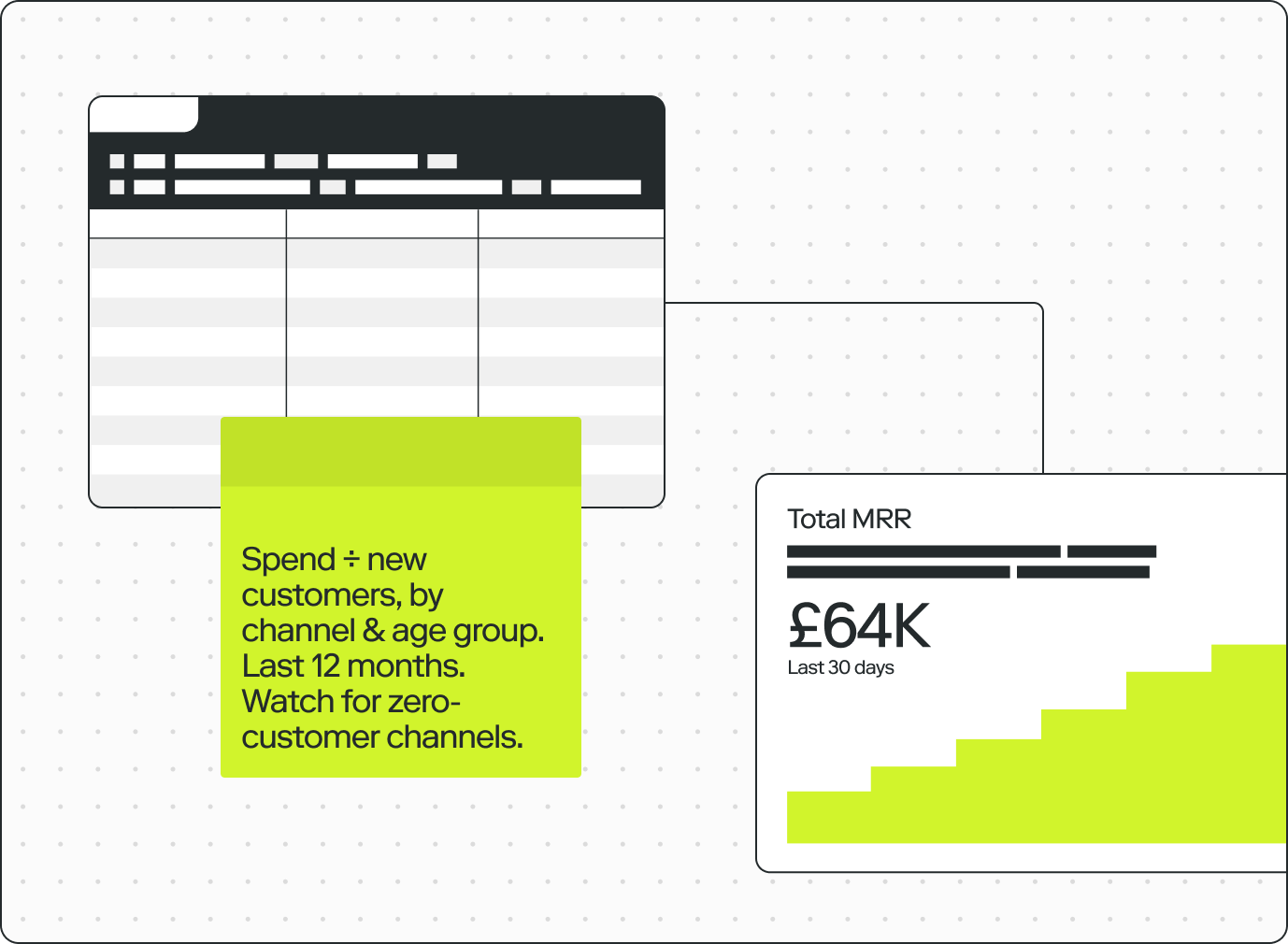
A chatbot gives you a number with no workings. You can't see what data it queried, how it was transformed, or whether the logic makes sense. You either take it on faith or start over.
In Count, the AI works alongside you on the canvas. Every query it writes, every transformation it applies, every step in its reasoning is visible. You can edit it, challenge it, and build on it.
Speed without the black box.
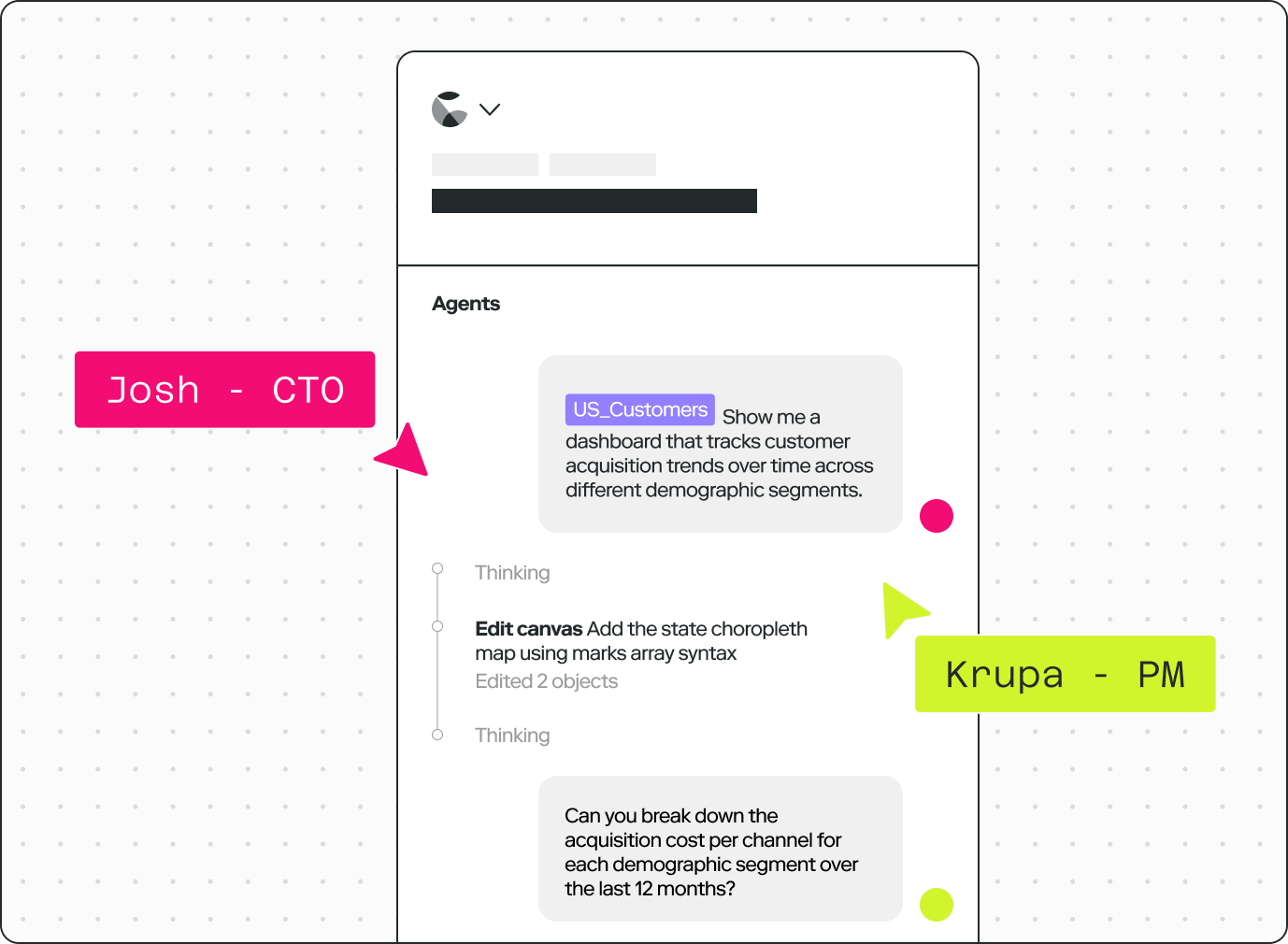
Chatbots are single-player experiences. You ask a question, get an answer but the insight is only for you. Hard to share, hard to discuss, impossible to build on as a team.
Count is collaboration-native. Share the canvas, build on each other's questions, challenge the findings, and reach a decision together. The value compounds instead of disappearing.
Chatbot outputs are disposable. The chart disappears when you close the tab.
You can't turn a chatbot conversation into a live dashboard, a metric tree, or a report that updates when your data changes.
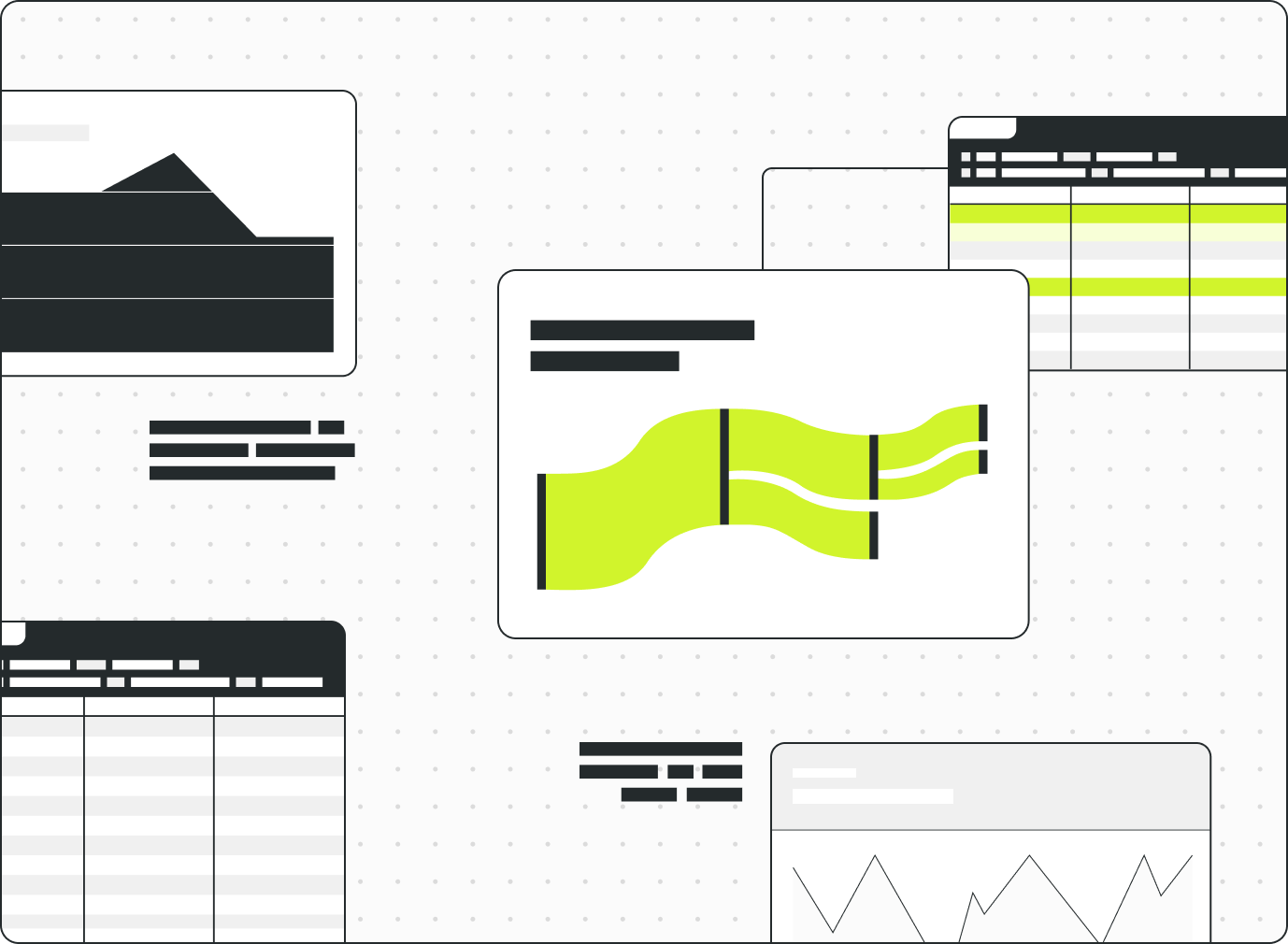
In Count, everything the AI builds lives on the canvas. It's auditable, reusable and connected to live data so you can turn a single question into a workflow.
Compare Count vs Chatbots
Count gives you all the speed of AI, but with trust, collaboration, and persistence built in.
Count · 2026
intelligence
layer for
executives.
The intelligence layer for executives.
Why growth-stage executives are flying blind and the decision architecture that changes it.
- →The five obstacles blocking senior leadership intelligence
- →A four-stage maturity curve: reactive, informed, proactive, anticipatory
- →A five-question, 60-second diagnostic to locate where you sit today
FAQs
Not exactly.
Most teams start using Count alongside their existing BI tool. Traditional BI is great for tracking metrics and sharing dashboards, but it’s not where people actually work with data. Count fills that gap — giving you a space to explore, analyze and think through problems.
Over time, teams use Count in different ways. Some move more of their reporting into Count, replacing static dashboards with something more flexible and collaborative. Others keep their BI tool for large-scale operational reporting, while using Count for deeper analysis and decision-making.
A lot of the messy, fragmented workflow teams rely on today.
SQL queries and notebooks for analysis. Slides for presenting. Spreadsheets for stitching things together. Slack threads for discussion. Count brings all of that into one place — so the work, the thinking, and the decisions stay connected.
Over time, many teams also reduce or replace parts of their BI stack. Instead of maintaining static dashboards, they use Count for more flexible, collaborative ways of understanding and improving the business.
Count’s agent is powered by leading models from Anthropic, OpenAI and Google.
It works with the context you provide (including your data, logic and previous analysis) and can run queries across the sources you’ve connected. This lets it explore questions, generate analyzes and go deeper, faster than a human alone.
Your data stays under your control. We don’t train models on it, and the agent will always ask permission before accessing external data sources.
Count runs queries in three places: directly on your data warehouse or connected sources, on Count’s servers, and in your browser. This flexible approach lets you combine data across sources while reducing the load on your warehouse.
For many teams, this also lowers costs. By shifting exploratory work out of the warehouse, some customers see significant reductions in compute spend.
Count’s infrastructure is hosted in the US and EU, and you can choose where your data is processed.
Yes.
Count is built with security and compliance at its core. We are SOC 2 compliant and adhere to GDPR requirements, with support for HIPAA where needed.
We apply industry-standard practices across data access, encryption and infrastructure to ensure your data is protected at every step.
For full details, visit our Trust Center at trust.count.co.