Stop waiting two weeks for the answer you needed yesterday
Count gives data-driven teams a shared space to work through complex questions and get to decisions faster.
All without Jira tickets.
Speeding up decision velocity at











How does marketing spend relate to product activation? Are leads converting to engaged users?
Your most important questions need data from multiple systems.
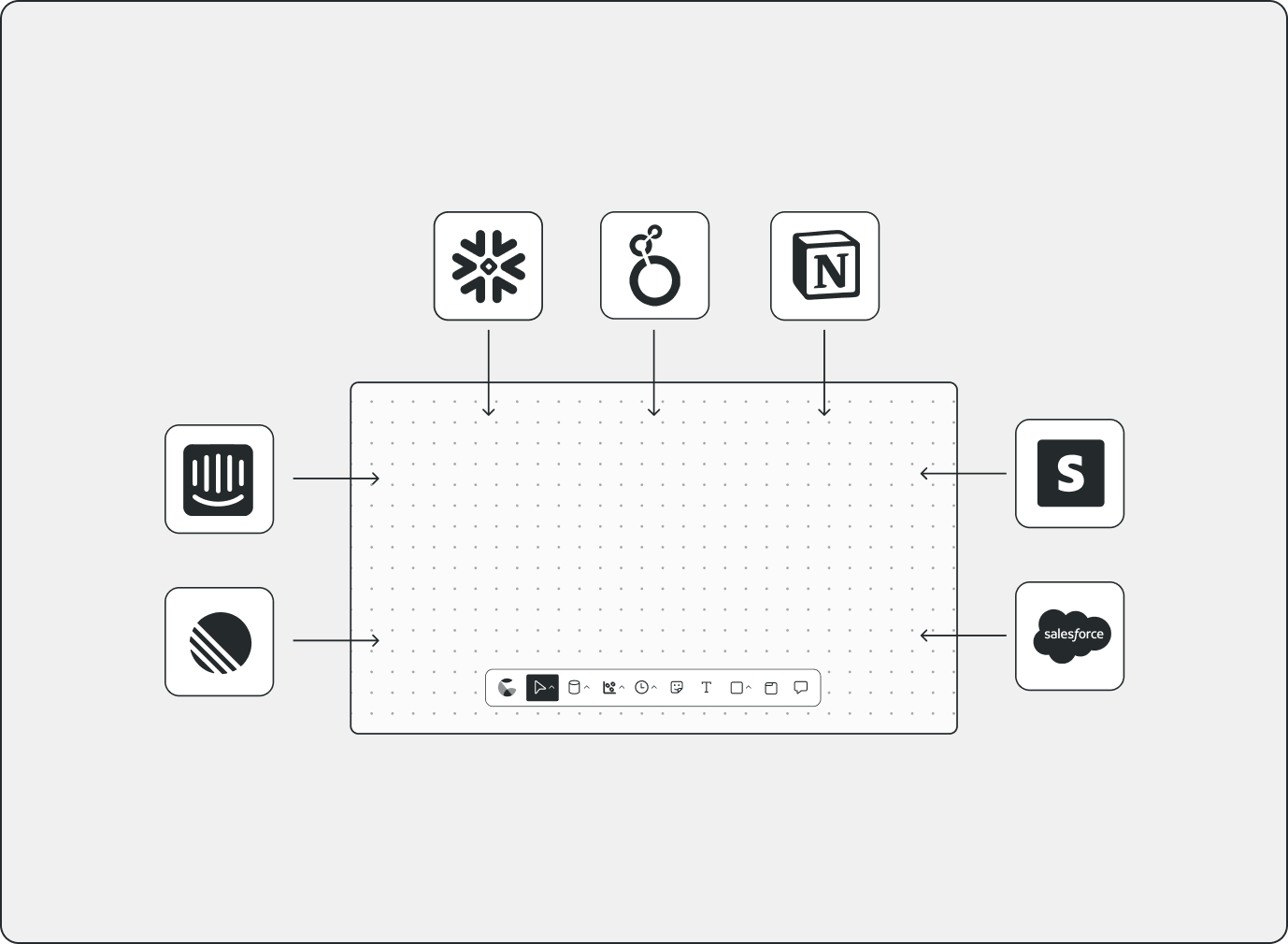
Count connects your warehouse, CRM, product analytics, and business tools in one canvas, so your questions are only limited by your imagination.
No need to learn SQL.
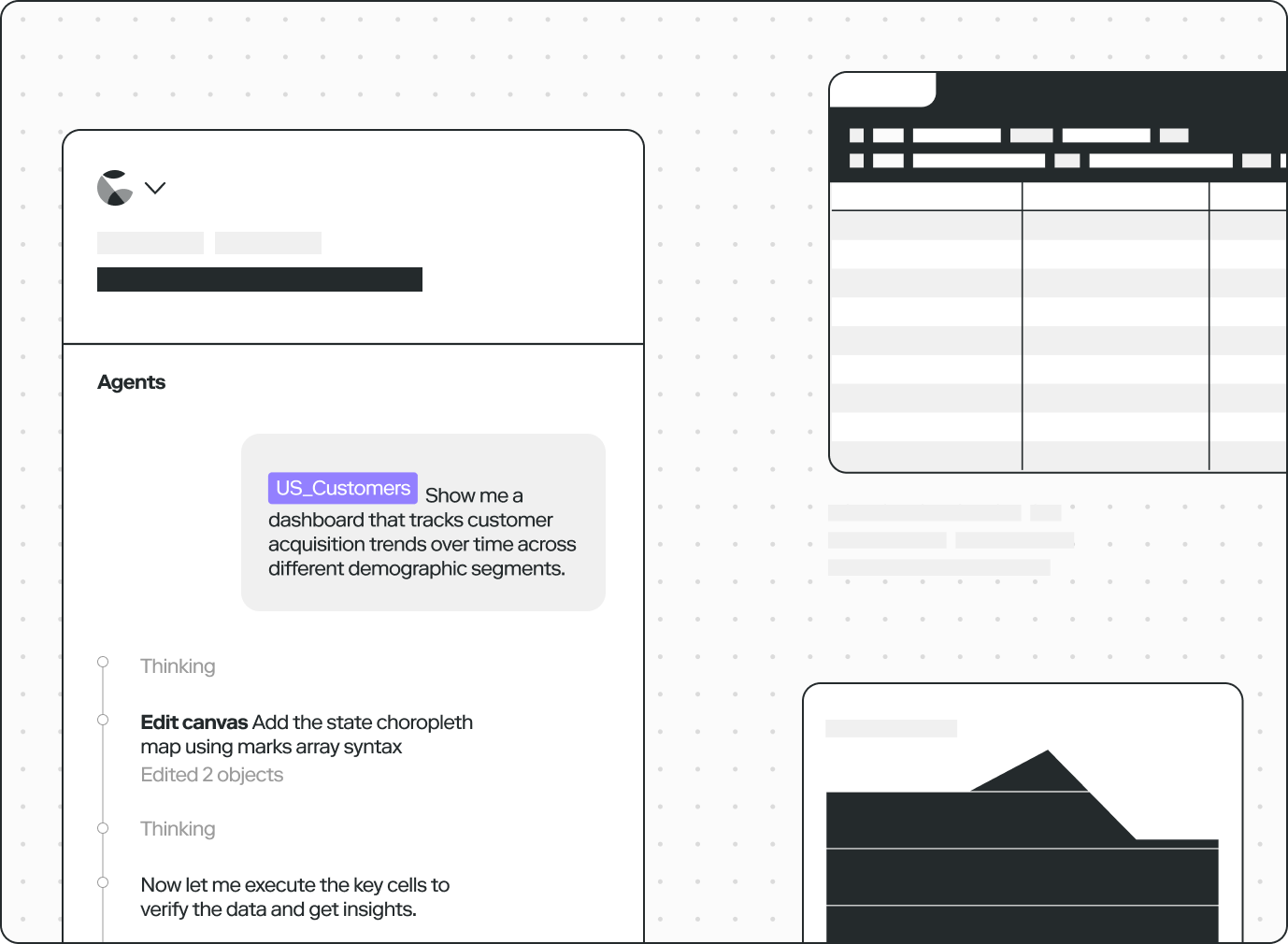
Count’s AI analyst writes the queries, builds the charts, and surfaces patterns for you, but unlike a chatbot, everything it does is transparent.
See what data was used, follow the logic, ask follow-up questions, and build off the result. No more black boxes you can’t trust.
Data, context, and decisions shouldn’t live in separate tools.
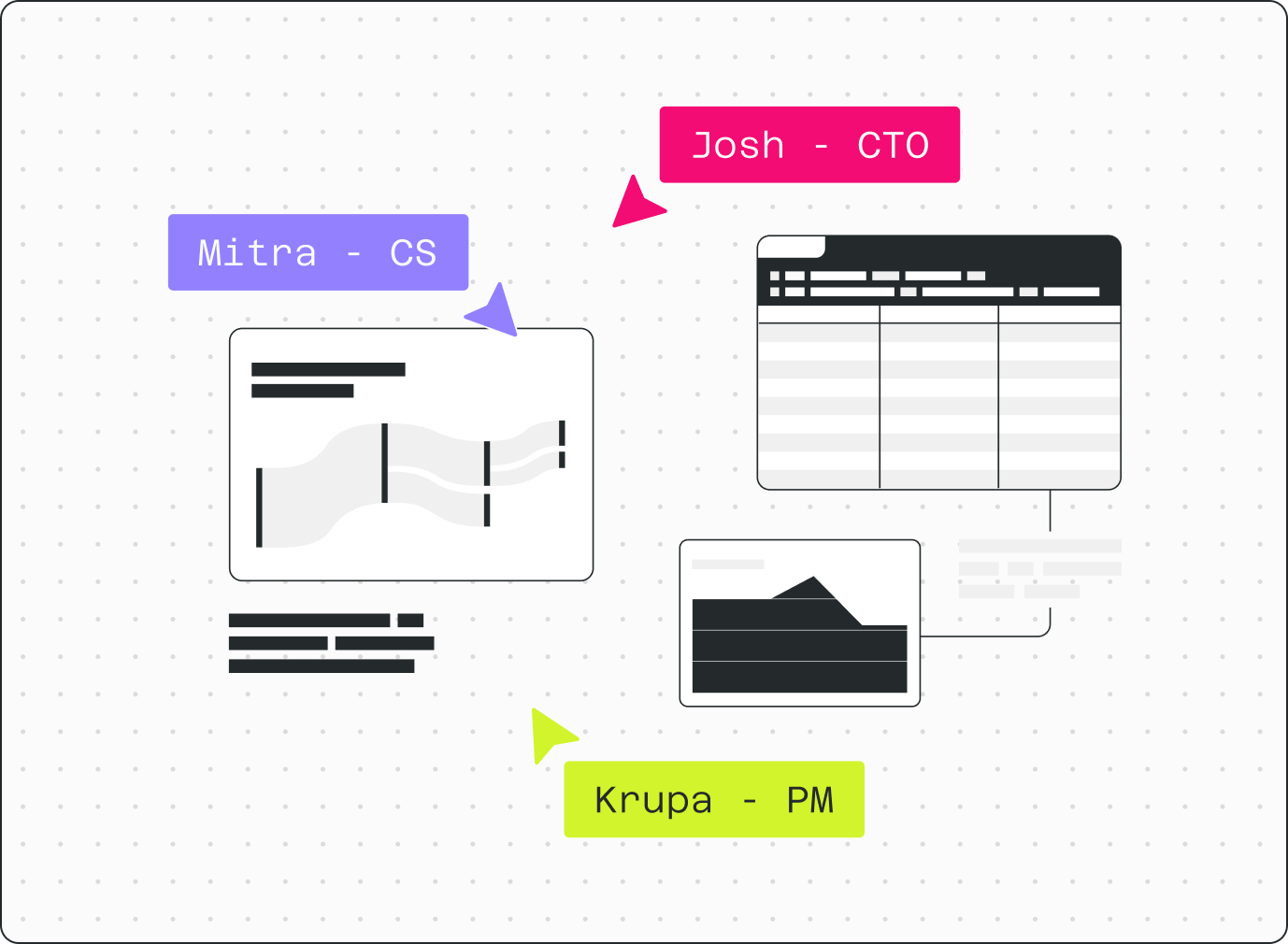
Bring together ideas, experiments and business knowledge in one shared place.
Work through problems with your team, align on what’s happening, and make decisions faster and with greater clarity.
Bring Count to where you work
Use Count’s MCP server to bring data into the tools and workflows you already use.
See all of our integrations →Before, only analysts had the tools and the time to dig into the data.
Now, with Count, product managers can run their own analyses, explore hypotheses, and answer questions independently.
Flore Morin,
Product @ Webinterpret
A different way to work with data
BI tools distribute information. Chatbots race to answers. Count is where teams actually figure out what’s going on and decide what to do next.
Compare Count to
Count vs BI tools
BI tools let you share metrics with lots of people. Count is for making decisions.
Count vs Notebooks
Notebooks are great for technical work. Count brings that work into a collaborative, flexible environment.
Count vs Chatbots
Chatbots give you quick answers. Count helps you trust and act on them.
For data & leadership teams
decision-
making
gap.
The decision-making gap.
Why most companies move slower than they should and a diagnostic to find out where you stand.
- →The four-stage maturity curve for decision velocity
- →The four structural barriers nearly every company faces
- →An 8-question diagnostic to map where your org sits