Funnel Analysis
Funnel analysis tracks how users move through your conversion process, revealing exactly where potential customers drop off and why your conversion rates aren't meeting expectations. Whether you're struggling to identify bottlenecks, don't know how to improve funnel conversion rates, or need a systematic approach to funnel analysis, this guide provides the frameworks and templates to optimize every step of your customer journey.
What is Funnel Analysis?
Funnel analysis is a method of tracking and measuring how users progress through a series of sequential steps toward a specific goal, such as making a purchase, signing up for a service, or completing an onboarding process. This analytical approach reveals where potential customers drop off during their journey, enabling businesses to identify bottlenecks and optimize their conversion paths. Understanding how to do funnel analysis step by step helps organizations pinpoint exactly which stages lose the most users and why.
The importance of funnel analysis lies in its ability to inform critical business decisions about user experience, marketing spend, and product development. When funnel conversion rates are high, it indicates an efficient user journey with minimal friction points. Conversely, low conversion rates or significant drop-offs at specific stages signal areas requiring immediate attention and optimization.
Funnel analysis works closely with several related metrics that provide deeper insights into user behavior. Funnel Conversion Analysis and Conversion Rate measure the overall effectiveness of your funnel, while Drop-off Analysis identifies specific problem areas. User Flow Analysis examines the paths users take through your funnel, and Cohort Analysis tracks how different user groups perform over time. Many businesses use a funnel analysis template to standardize their measurement approach and ensure consistent tracking across different campaigns and time periods.
How to do Funnel Analysis?
Funnel analysis involves tracking user progression through sequential steps to identify where potential customers drop off and optimize conversion rates. This systematic approach helps businesses understand user behavior patterns and pinpoint bottlenecks in their conversion process.
Approach: Step 1: Define your funnel stages and map the user journey from initial interaction to final conversion Step 2: Collect data on user actions at each stage, measuring both entries and exits Step 3: Calculate conversion rates between stages and identify the biggest drop-off points Step 4: Analyze patterns by user segments, traffic sources, or time periods to uncover insights
Worked Example
Consider an e-commerce checkout funnel with these stages:
- Product View: 10,000 users
- Add to Cart: 2,500 users (25% conversion)
- Checkout Started: 1,500 users (60% conversion from cart)
- Payment Info: 1,200 users (80% conversion)
- Purchase Complete: 900 users (75% conversion)
The analysis reveals that the biggest drop-off occurs between product view and adding to cart (75% drop-off), suggesting issues with product presentation, pricing, or trust signals. The second major bottleneck is payment completion (25% drop-off), indicating potential problems with payment processing or unexpected costs.
Variants
Time-based funnels track conversions within specific timeframes (24 hours, 7 days) to understand urgency patterns. Cohort-based funnels group users by acquisition date or characteristics to compare performance across different user segments. Micro-funnels focus on granular steps within larger processes, while cross-platform funnels track users across multiple devices or channels.
Choose time-based analysis for understanding conversion windows, cohort-based for comparing user groups, and micro-funnels for detailed optimization of specific processes.
Common Mistakes
Ignoring sample size requirements leads to unreliable conclusions—ensure each funnel stage has sufficient volume for statistical significance. Mixing user types in the same analysis can mask important patterns; segment by traffic source, device type, or user characteristics for clearer insights. Focusing only on aggregate data misses seasonal patterns, campaign impacts, and user behavior changes over time that could explain conversion variations.
Ready to Actually Analyze Your Funnel?
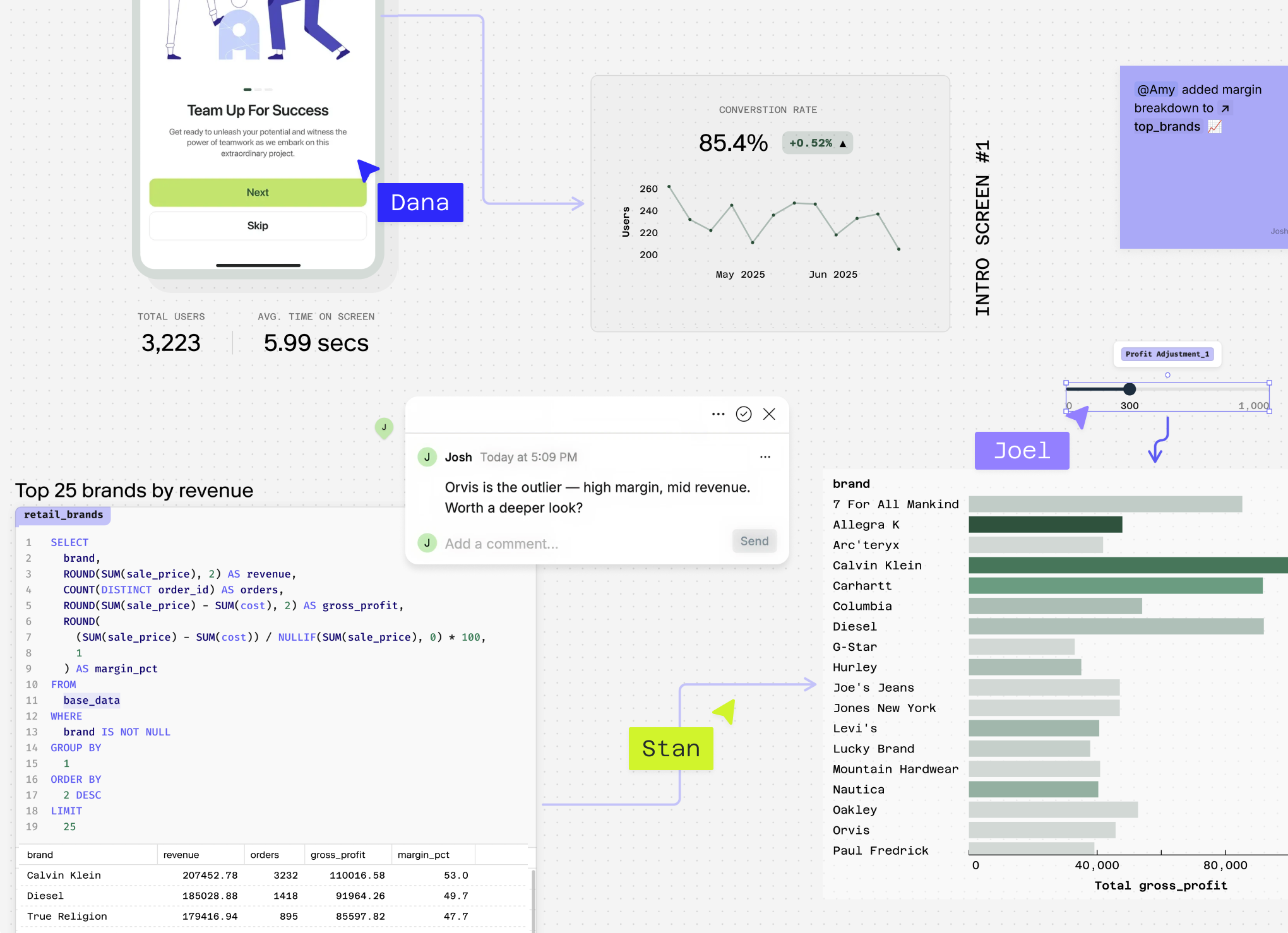
Stop reading about funnel analysis and start doing it. Count connects your data, AI, and team in one canvas to spot dropoffs and fix conversion gaps fast.
What makes a good Funnel Analysis?
It's natural to want to benchmark your funnel performance against industry standards, but remember that context matters significantly. While benchmarks provide valuable reference points to inform your thinking, they shouldn't be treated as strict rules—your unique business model, target audience, and market positioning all influence what "good" looks like for your specific situation.
Funnel Conversion Benchmarks by Industry
| Industry | Business Model | Stage | Typical Conversion Rate | Source |
|---|---|---|---|---|
| SaaS | B2B Self-serve | Early-stage | 2-5% (visitor to trial) | Industry estimate |
| SaaS | B2B Enterprise | Growth | 15-25% (demo to close) | OpenView SaaS Benchmarks |
| SaaS | B2C Freemium | Mature | 1-3% (free to paid) | Industry estimate |
| Ecommerce | B2C | All stages | 2-4% (visitor to purchase) | Shopify Commerce Report |
| Fintech | B2C Mobile | Growth | 8-15% (signup to funding) | Industry estimate |
| Subscription Media | B2C | Mature | 5-10% (trial to paid) | Industry estimate |
| Lead Gen | B2B | All stages | 10-20% (lead to qualified) | HubSpot State of Marketing |
| Marketplace | B2B/B2C | Growth | 3-8% (visitor to transaction) | Industry estimate |
Understanding Benchmark Context
These benchmarks help establish your general sense of performance—you'll quickly know when something feels significantly off. However, it's crucial to understand that many metrics exist in tension with each other. As you optimize one aspect of your funnel, another may naturally decline. Rather than optimizing any single metric in isolation, you need to consider related metrics holistically and understand the trade-offs you're making.
How Related Metrics Interact
Consider how funnel conversion rates interact with other key business metrics. If you're improving your lead qualification process to increase conversion rates from lead to customer, you might see your overall lead volume decrease as you become more selective. Similarly, if you're moving upmarket to target enterprise customers with higher contract values, your conversion rates might drop due to longer sales cycles and more complex decision-making processes, but your revenue per customer will increase significantly.
The key is understanding these relationships and ensuring your funnel optimization aligns with your broader business objectives rather than chasing any single conversion rate in isolation.
Why is my conversion funnel dropping?
When your conversion rates are declining, the root cause often lies in specific funnel stages or external factors disrupting user flow. Here's how to diagnose what's driving your funnel drop-off:
Poor User Experience at Critical Steps Look for sudden spikes in bounce rates or time-on-page at specific funnel stages. If users are abandoning at checkout or signup forms, you'll see increased exit rates and decreased page-to-page progression. This often cascades into lower overall conversion rates and reduced customer lifetime value.
Traffic Quality Degradation Monitor your traffic sources and user engagement metrics. If new visitors have higher bounce rates or lower session durations compared to historical data, you're likely attracting less qualified prospects. Poor traffic quality creates a domino effect, inflating your customer acquisition costs while reducing funnel conversion rate.
Technical Issues Blocking Progression Check for error rates, page load times, and mobile responsiveness issues. Users encountering broken forms, slow-loading pages, or mobile compatibility problems will abandon mid-funnel. These technical barriers often show up as unusual drop-off patterns at specific steps rather than gradual decline.
Messaging Misalignment Examine whether your value proposition matches user expectations at each stage. If users enter your funnel expecting one thing but encounter different messaging or offers, drop-off rates spike. This misalignment typically manifests as high initial engagement followed by sharp abandonment.
External Market Changes Consider seasonal trends, competitive pressures, or economic factors affecting user behavior. Market shifts can reduce purchase intent or increase price sensitivity, impacting your entire funnel performance and requiring strategic adjustments to maintain conversion rates.
How to improve funnel conversion rate
Optimize High-Impact Drop-off Points Focus your efforts on the funnel stages with the largest drop-offs first. Use Drop-off Analysis to identify where users abandon most frequently, then A/B test specific improvements like simplified forms, clearer CTAs, or reduced friction. Validate impact by measuring conversion rate changes before and after implementation.
Segment Users by Behavior Patterns Not all users drop off for the same reasons. Apply Cohort Analysis to group users by acquisition source, device type, or engagement level, then tailor improvements to each segment's specific barriers. This targeted approach often yields higher conversion improvements than broad changes.
Address Technical and UX Friction Page load times, broken links, and confusing navigation are silent conversion killers. Audit your funnel for technical issues using User Flow Analysis to map actual user paths versus intended ones. Fix technical problems first—they often provide the quickest wins for improving funnel conversion rates.
Test Timing and Messaging Alignment Poor conversion often stems from mismatched expectations between marketing messages and funnel experience. Review your acquisition channels through Funnel Conversion Analysis to identify which sources bring users who convert poorly, then align messaging or adjust targeting to attract better-qualified traffic.
Implement Progressive Disclosure Reduce cognitive load by breaking complex processes into smaller, digestible steps. Test shorter forms, multi-step processes, or progressive profiling to reduce funnel drop off rates. Use your existing analytics data to identify optimal breakpoints rather than guessing—look for natural pause points in user behavior patterns.
Run your Funnel Analysis instantly
Stop calculating Funnel Analysis in spreadsheets and losing hours to manual data wrangling. Connect your data source and ask Count to calculate, segment, and diagnose your funnel performance in seconds—no SQL required.
Explore related metrics
Funnel Conversion Analysis
While funnel analysis shows you the overall user journey, funnel conversion analysis helps you calculate the specific conversion rates between each step to quantify performance.
Conversion Rate
Track conversion rates to measure the effectiveness of each funnel step and benchmark your overall funnel performance against industry standards.
Drop-off Analysis
Identify exactly where users are abandoning your funnel so you can prioritize optimization efforts on the stages causing the biggest losses.
User Flow Analysis
Understand the actual paths users take through your product, including unexpected routes and behaviors that your predefined funnel might be missing.
Cohort Analysis
Track how funnel performance changes over time for different user groups to identify whether improvements are sustained and which segments convert best.
Ready to Actually Analyze Your Funnel?
Stop reading about funnel analysis and start doing it. Count connects your data, AI, and team in one canvas to spot dropoffs and fix conversion gaps fast.