Explore Meeting Frequency Rate using your Granola data
Meeting Frequency Rate in Granola
Meeting Frequency Rate reveals critical patterns in your team's collaboration rhythm using Granola's rich meeting data. Since Granola captures detailed meeting transcripts, participant engagement levels, and recurring meeting patterns, this metric becomes invaluable for understanding how to increase meeting frequency rate and diagnosing why is meeting frequency rate low across different teams, projects, or time periods.
For Granola users, Meeting Frequency Rate analysis can inform crucial decisions about team productivity, project momentum, and communication effectiveness. By examining meeting cadence alongside transcript sentiment and participation quality, you can identify whether low frequency stems from over-scheduling fatigue, team disengagement, or genuine efficiency gains from fewer but more focused sessions.
Manual analysis falls painfully short here. Spreadsheets become unwieldy when trying to correlate meeting frequency with Granola's qualitative data like discussion topics, decision-making effectiveness, or participant sentiment across multiple dimensions. The permutations are endless, formula errors inevitable, and maintaining these calculations as your meeting data grows becomes a full-time job.
Granola's built-in reporting offers basic frequency metrics but can't answer nuanced questions like "Which teams maintain optimal meeting cadence while achieving high engagement scores?" or "How does meeting frequency correlate with project milestone completion?" These rigid outputs lack the segmentation depth needed to actionably improve your meeting culture.
Count transforms this analysis by connecting Granola's meeting intelligence with your broader business metrics, revealing the true impact of meeting frequency on team performance.
Stop reading about meeting frequency. Start analyzing yours.
Connect your Granola data directly to Count's AI-powered canvas. Go from raw meeting patterns to actionable insights in one collaborative session.
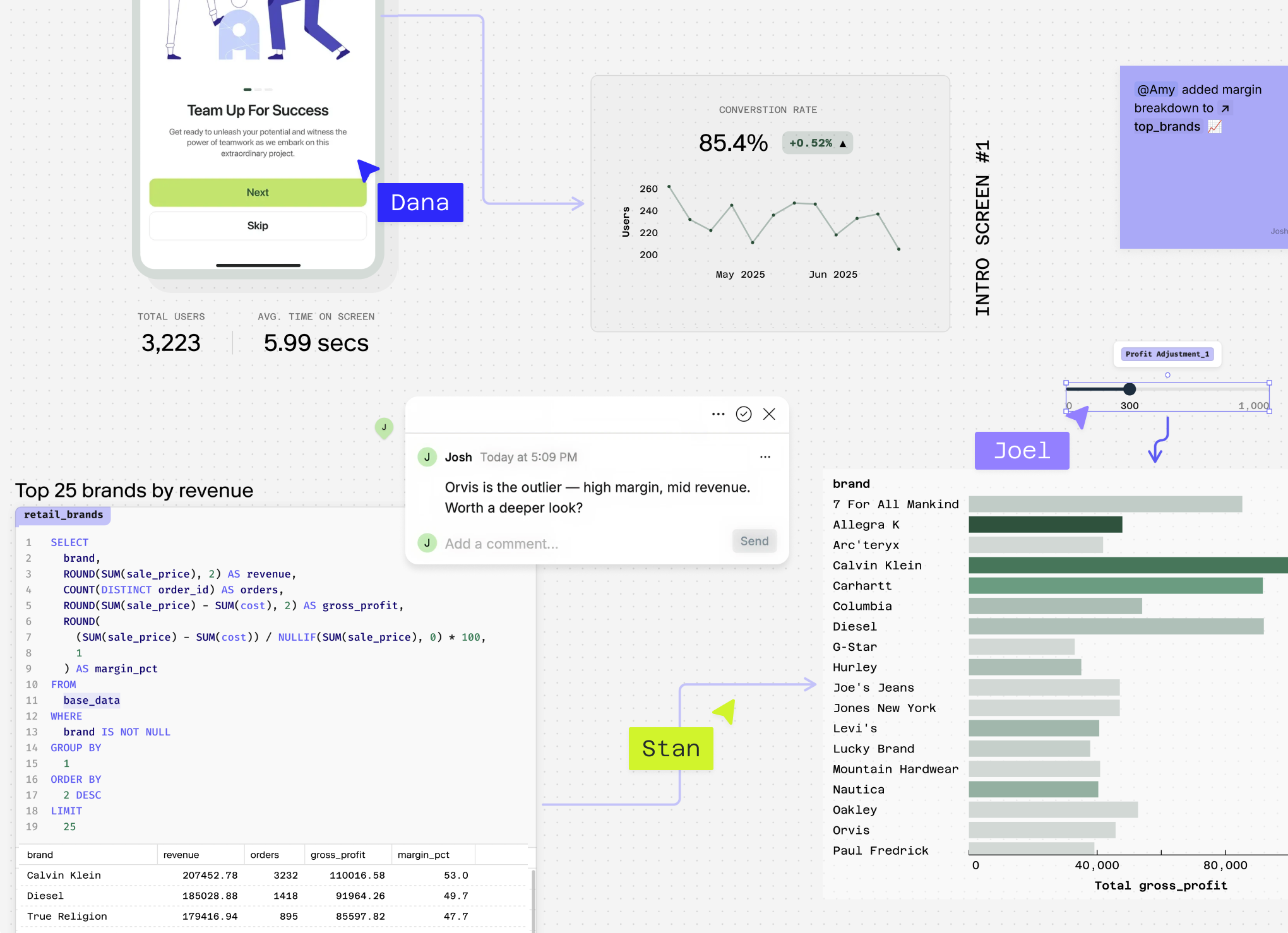
Questions You Can Answer
What's our overall meeting frequency rate across all teams this quarter? This baseline question helps you understand your organization's current collaboration cadence using Granola's comprehensive meeting data, establishing a foundation for identifying optimization opportunities.
Why is meeting frequency rate low for our product development team compared to sales? By comparing meeting patterns across different teams in Granola, you can uncover whether low frequency stems from team-specific workflows, communication preferences, or potential collaboration gaps that need addressing.
How does meeting frequency correlate with participant engagement levels in our recorded sessions? Granola's transcript analysis reveals whether teams with higher meeting frequency also show stronger engagement metrics, helping you understand if more meetings actually drive better collaboration outcomes.
Which meeting types (standup, planning, review) have the highest frequency rates and best participation scores? This analysis leverages Granola's meeting categorization to identify which formats drive consistent attendance, informing how to increase meeting frequency rate through proven successful meeting structures.
How has our meeting frequency rate changed since implementing async-first policies, broken down by department and seniority level? This sophisticated query combines Granola's participant data with temporal analysis to understand policy impacts across different organizational segments, revealing why meeting frequency rate might be low in specific contexts.
What's the relationship between meeting frequency, average session duration, and follow-up action completion rates? By connecting Granola's meeting metrics with outcome tracking, this question uncovers whether optimizing frequency improves actual productivity and decision-making effectiveness.
How Count Analyses Meeting Frequency Rate
Count's AI agent crafts bespoke analysis for your Meeting Frequency Rate questions using Granola data — no rigid templates, just custom SQL and Python logic tailored to your specific needs. When investigating how to increase meeting frequency rate, Count might segment your Granola data by team size, meeting duration, participant seniority levels, and project phases in a single comprehensive analysis.
Running hundreds of queries in seconds, Count uncovers hidden patterns in your meeting cadence that manual analysis would miss. It automatically handles Granola's messy data — cleaning inconsistent participant names, normalizing meeting titles, and filtering out system-generated entries — so you get reliable insights about why meeting frequency rate is low without data quality headaches.
Count's transparent methodology shows exactly how it calculated frequency rates across different time periods, participant groups, and meeting types. You can verify every assumption, from how it handles recurring meetings to participant attendance thresholds.
The platform delivers presentation-ready analysis that transforms your meeting frequency questions into actionable insights. Instead of spending hours in spreadsheets, you get deep analysis showing which teams have optimal meeting cadences and which need intervention.
Count's collaborative features let your team explore results together, asking follow-up questions like "How does meeting frequency correlate with project delivery?" Plus, Count connects your Granola meeting data with other sources — project management tools, performance metrics, or team surveys — to understand the full context behind your meeting patterns.
Explore related metrics
Stop reading about meeting frequency. Start analyzing yours.
Connect your Granola data directly to Count's AI-powered canvas. Go from raw meeting patterns to actionable insights in one collaborative session.